 Previous
It’s that time of year again. Transition time, turning from the end of one year toward the beginning of the next.
We reflect on where we’ve been and what we’ve done, on changes and accomplishments. We wrap up year-end projects, celebrate the winter holidays, bask in the warmth of family gatherings, revel in the final day of the year—and then start worrying about the new one.
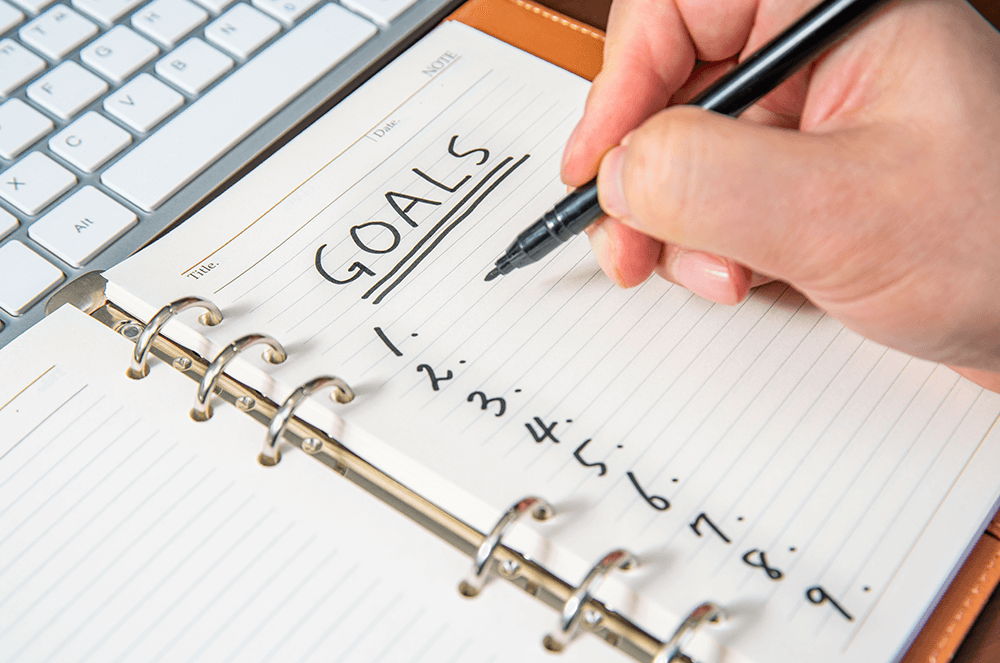
Which brings me to goal setting. The yearly ritual that’s as familiar as gift giving and arguing politics with your belligerent uncle. At the end of the year, new goals must be set.
I have a tortured relationship with the process. Yes, it feels good to achieve what we set out to do. But it can be a grueling road to get there.
New Year’s resolutions bring emotional whiplash. I start January burning with ambition, lose momentum by February, recommit in April, slip up in the summer, and then stumble home, making sharp revisions along the way.
Lose 20 pounds by the end of the year? Hmm, 10 is more realistic … hey, what about four? Four’s not bad!
Learn a new hobby? Well … I learned to reprogram my phone. I did do that.
Of course, I know there are myriad benefits to establishing goals. By speaking your aspirations out loud, marking them down, and committing to them, you make them real. Creating a tangible timeline increases motivation. Certainly in Toastmasters we know the value of setting and achieving goals. Plan your path to success, one Pathways project at a time.
I’ve learned strategies along the way. At the top of the list: Set goals that are manageable and realistic. When you’re sitting with your family listing New Year’s resolutions, don’t start promising dramatic changes in your personality and your pocketbook.
Now I just boil my goal setting down to this: Be better. Period.
My goals tend to be along fairly conventional lines: Join a new group, organize my files, eat less, exercise more, clean out the garage, read more books. Also, going more broadly: Be a better husband, a better father, a better son, a better brother, and a better uncle. That’s a lot of relationship ground to cover.
Now I just boil it down to this: Be better. Period. It streamlines the process and covers all your bases. Be better, and let’s leave it at that.
The end of the year is also a good time to put those Toastmasters skills to practical use. To communicate more clearly, lead with grace and efficiency, and evaluate with insight. I speak, of course, of navigating the holiday office party. Get yourself ready to run an obstacle course of social protocols as you try not to embarrass yourself in front of the boss, or get cornered in a conversation with no exit point in sight.
I also can spot my internal Scrooge this time of year. He often appears in the aisles of retail stores, where a bounty of irritations exist: the crowds, the missing food items, the noise.
Also, the greeting cards. Never has communication cost so much. You can spend less going to the movies than on an embroidered 12-word message wishing friends a Merry Christmas or Happy Hanukkah.
And with that, I’d like to wish Toastmasters around the globe a 2026 filled with good health, satisfying speeches, and joyful experiences. Never have the qualities of skillful speaking and listening—of civility and open-mindedness—been more vital to the world we live in.
As Toastmasters, we can set our own goals for the year ahead. In and outside of club meetings, we can show empathy, awareness, and encouragement. We can build on a year of success ... and also be better.

Share this article


Paul Sterman is senior editor, executive and editorial content, for Toastmasters International. Reach him at psterman@toastmasters.org.
 Previous Article