 Previous

For Maureen McBeath, DTM, the value of the Toastmasters Youth Leadership Program (YLP) comes down to a girl named Genny.
She was a 10th-grade special-needs student in McBeath’s YLP class in Sechelt, British Columbia, Canada, where McBeath has been leading the programs for more than a dozen years. On one session’s first day, Genny stood up, defiantly announced, “I’m not doing this,” and walked out.
But she came back, and kept coming back, until one day she stood again, pointed to McBeath and her teacher, and told the other students, “Like they said—just do it. It’s not that hard. I’ve done two presentations in my classes already this year.” The lunch bell rang. The girl who had never said much before kept talking—and the class kept listening—for three more minutes.
Not only did Genny become a leader in the class, but she took what she’d learned outside. Already competing in the Special Olympics with her community’s swim club, she began winning national titles and handled local media interviews like a pro. McBeath still cherishes the note Genny gave her in a card at the end of the program: “Toastmasters rocks,” it said.
“Genny became somebody who could speak up for herself,” McBeath says proudly. “You want to know if this changes kids’ lives? In my mind, it does.”
“The kids get over their fear of public speaking— they learn that it is no big deal to get up in front of people and talk.”
—Terry Spencer, DTMDeveloping Skills
Stories like that abound from those who’ve led YLP sessions, which take the Toastmasters experience to the next generation, specifically students ages 14–18.
The need for clear communication and strong leadership doesn’t suddenly appear when someone turns 18; success in school and in the community demands those skills years before adulthood.
It’s not a recruitment tool to get club members, but is intended to help young people become better speakers and leaders now and in the future.
“Imagine if every child had people applauding them when they stood up to give a speech, and applauded them afterward. Then perhaps they wouldn’t be so afraid of speaking in public,” says McBeath, a member of Sunshine Toastmasters in Sechelt.
The program consists of eight sessions, each lasting one to two hours, offered by Toastmasters during or after school, or on weekends. The workshops teach a range of skills, including delivering prepared and impromptu speeches, controlling physical delivery, and giving and receiving feedback. Meetings are organized like Toastmasters club meetings, with a formal agenda and presiding officers elected to run the meetings.
Technical speaking skills may be the least of what they learn.
“They learn flexibility and creativity, develop more confidence, and they become secure in taking a risk,” says Linda Denton, DTM, YLP coordinator for the Founder’s District in Orange County, California, and a member of South Orange County Toastmasters. “The kids bond with each other and help each other, and they take turns being a leader.”
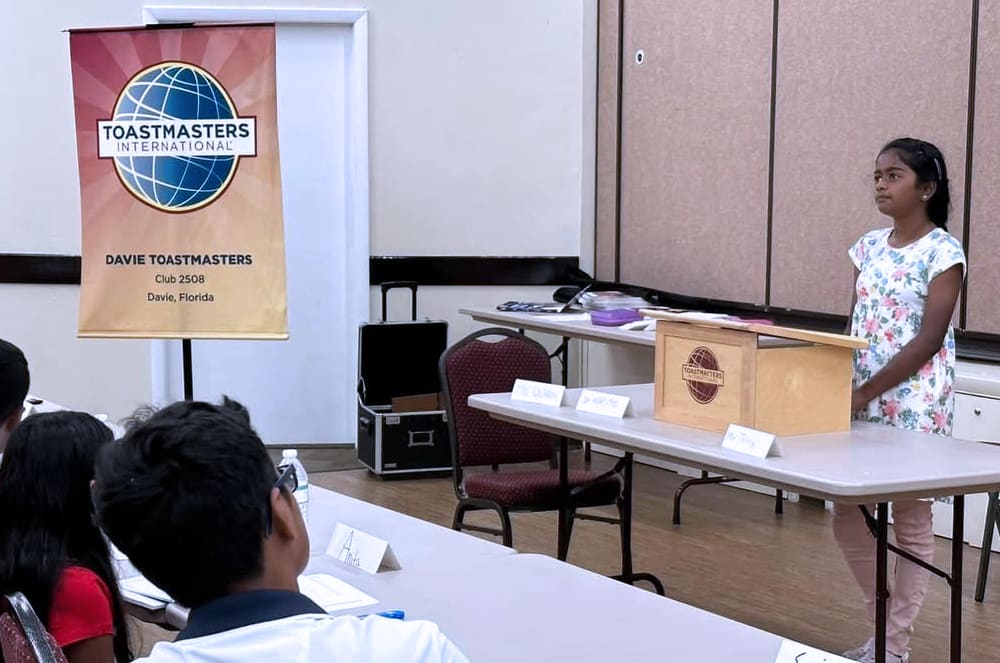 Davie Toastmasters in Florida has held a Youth Leadership Program nearly every year since 2012.
Just like adult Toastmasters, they get a safe learning environment where everyone supports each other and mistakes don’t matter.
“The kids get over their fear of public speaking—they learn that it is no big deal to get up in front of people and talk,” says Terry Spencer, DTM, a member of Davie Toastmasters in Davie, Florida, which has held a YLP almost every year since 2012. “That is a benefit that will last a lifetime. Some of our students have gone on to be members of their high school speech and debate teams. One girl gave a TEDxYouth talk and thanked us for the confidence we instilled in her.”
“Imagine if every child had people applauding them when they stood up to give a speech, and applauded them afterward. Then perhaps they wouldn’t be so afraid of speaking in public.”
—Maureen McBeath, DTMRewards of Leading
The adults benefit as much as the students, says Spencer.
“First, it is so much fun working with the kids. They are delightful and they improve so much over the eight weeks. And when you are teaching kids, you have to really think about the basics, so we reinforce our own knowledge as we pass it along to the kids. And it gives the members a good feeling, knowing we have helped children.”
Denton sees adults coming away with improved leadership, teamwork, and listening abilities; even better, they have the satisfaction of having a positive impact on society by educating the next generation, all of which helps raise emotional intelligence, she says.
“It really forces you to be organized,” says Mary Schoendorfer, DTM, Youth Leadership Chair for District 42 in Canada (Southern Alberta and Southern Saskatchewan), and a member of Literally Speaking in Calgary, Alberta. “It asks you to own the program. We really encourage people to make it their own.”
McBeath agrees. She advises against being too strictly tied to the meeting agenda, especially in the beginning. “Starting the first meeting by electing officers, the kids aren’t going to go for that. That’s boring.” Instead, she gets them talking—about vacations, jobs, hobbies. They learn that “public speaking” needn’t be a big, formal project; it can be sharing stories about yourself with a few people in a classroom. The formalities can come later.
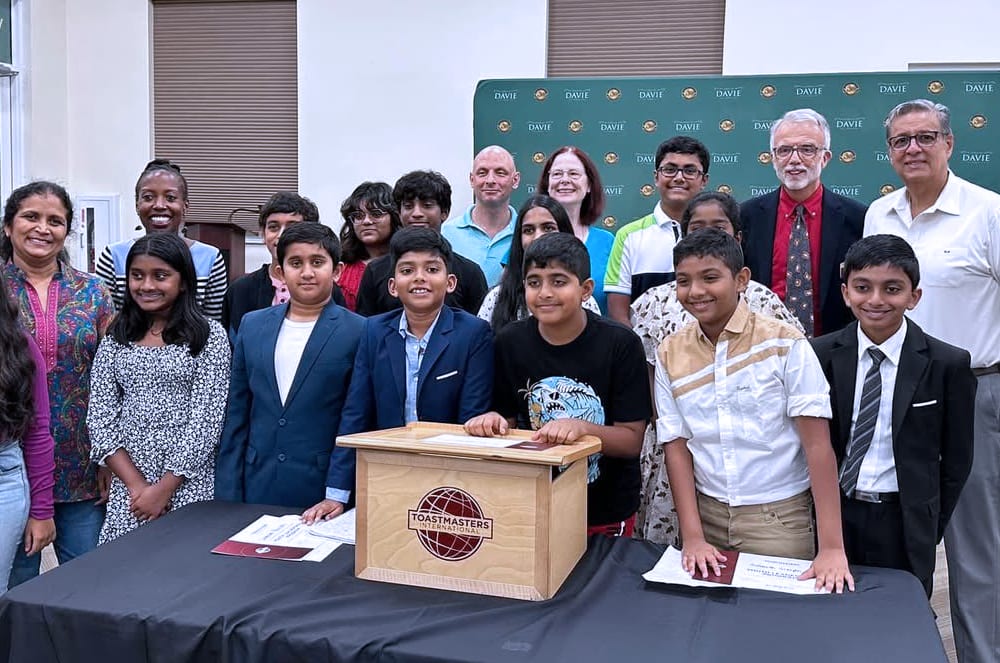 Participants and facilitators in a YLP program presented by Davie Toastmasters in Florida.
 Overcoming Challenges
Running a YLP is as challenging as any other program, whether for adults or youth. From finding (and keeping) a meeting place to dealing with reluctant students, it’s not always easy.
“The biggest problem is getting facilitators,” Schoendorfer says. Many people are still at work in the after-school hours or are busy with their families on the weekends. Others are just “uncertain about working with kids.” McBeath has the same experience: “A lot of people are just scared to death of working with high school students.”
That’s why Schoendorfer recommends recruiting club members who believe in helping youth. She and her teams got involved, she says, because “we wanted to help kids get the skills we wanted to have when we were young.”
Whatever you do, remember that you don’t have to be perfect, Schoendorfer says. “Even a little Toastmasters is better than no Toastmasters.”

Share this article


 Coordinators’ Tips for an Effective YLP
Kate McClare, DTM , is a professional writer and editor who joined Toastmasters in 2011. She is a member of Miami Advanced Toastmasters Club in Kendall, Florida, and an Area Director for District 47, Southeast Florida and The Bahamas.
 Previous Article


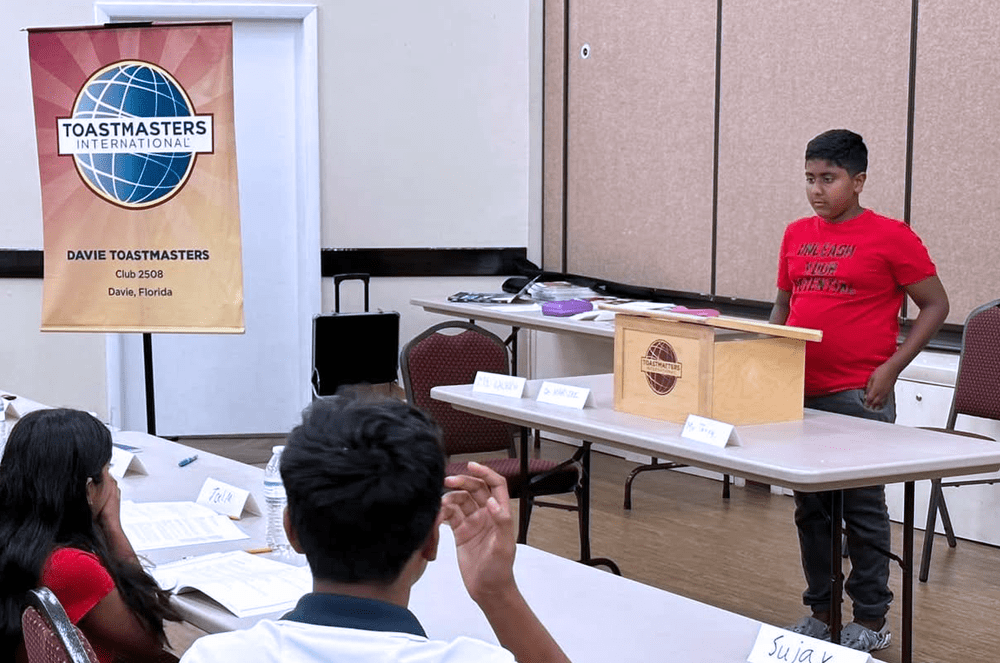 A student presents during a YLP session hosted by Davie Toastmasters.